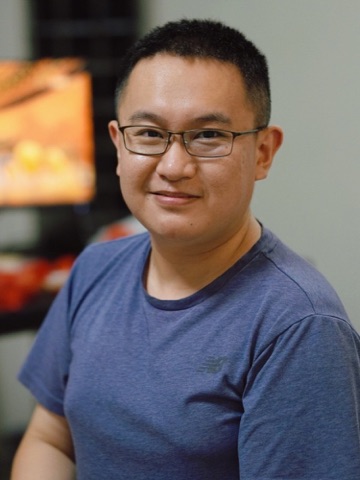
Lijun An receives his first grant, on agentic AI for biomarker discovery
Lijun An received his first grant, on agentic AI for biomarker discovery, funded by the Biswas Family Foundation. Congratulations, Lijun!
Read about the grants
Lijun An received his first grant, on agentic AI for biomarker discovery, funded by the Biswas Family Foundation. Congratulations, Lijun!
Read about the grants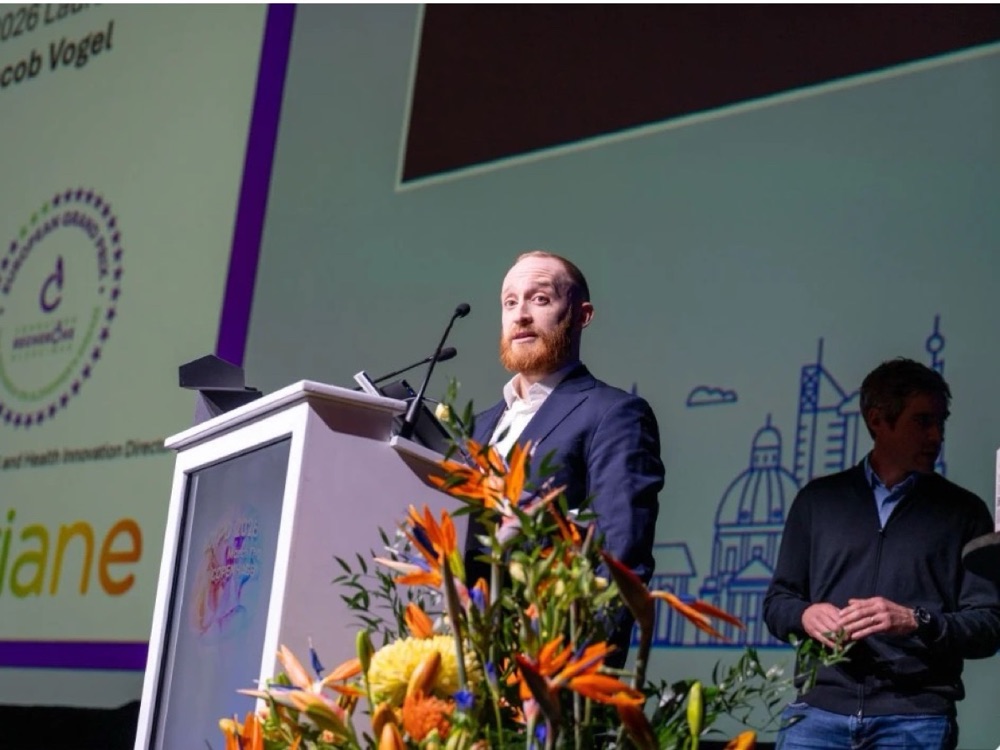
Our PI Jacob Vogel was awarded the Young Researcher Prize 2026 by the Fondation Recherche Alzheimer, at the award ceremony held at the AD/PD meeting in Copenhagen. Congratulations, Jake!
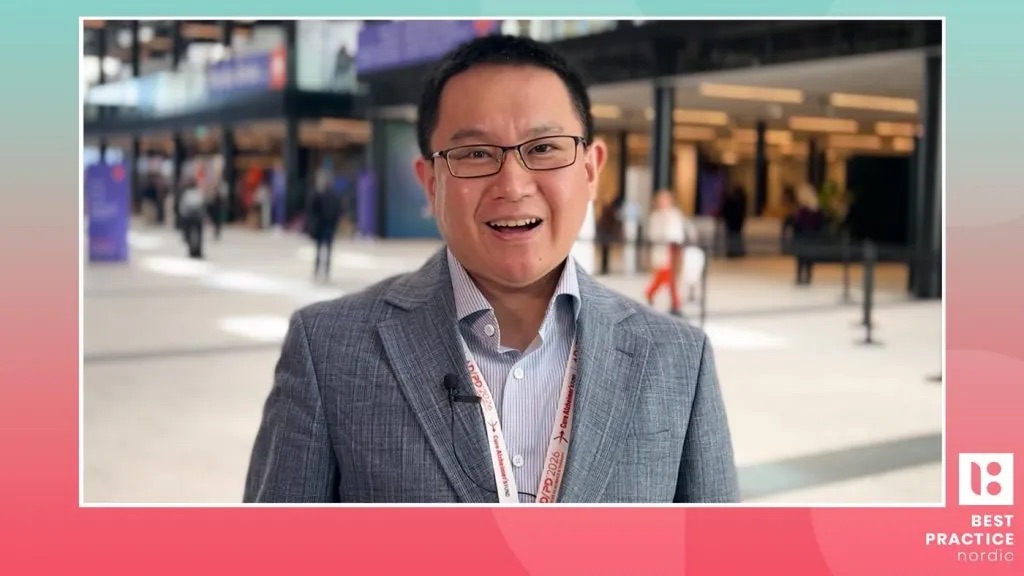
Lijun An received the AD/PD Junior Faculty Award. Congratulations, Lijun!
Read about the award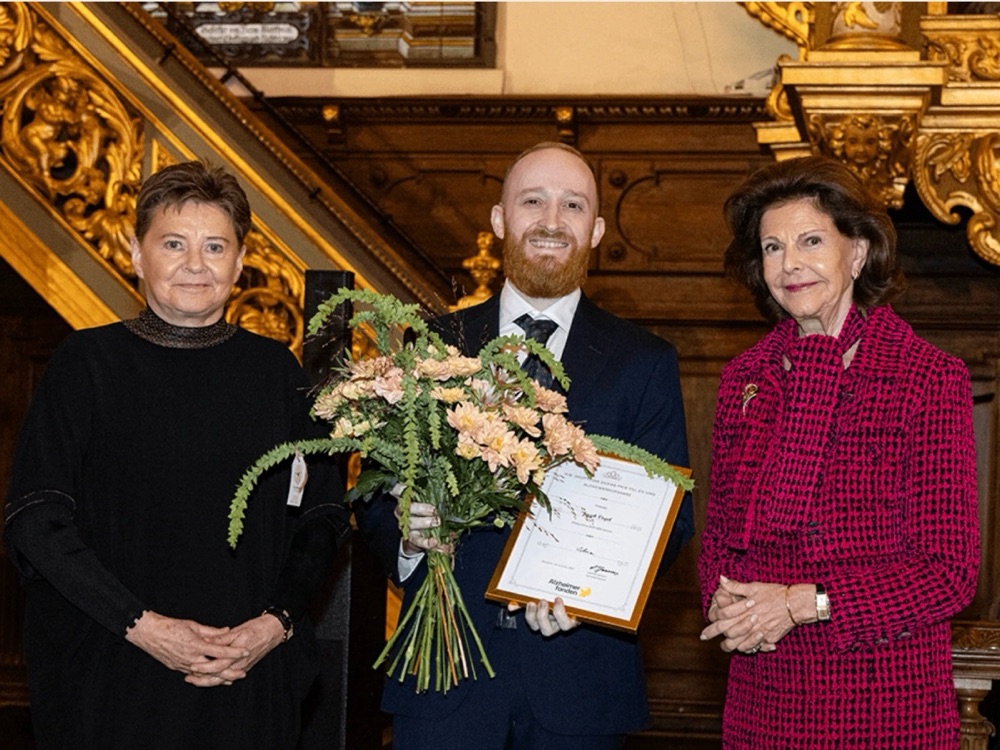
Jacob Vogel received H.M. Queen Silvia's Prize for a young Alzheimer's researcher, instituted by Alzheimerfonden, at a ceremony at the German Church in Stockholm. The prize recognizes his contributions to Alzheimer's research, including work suggesting four distinct types of the disease and evidence that tau can spread through the brain along neurons.
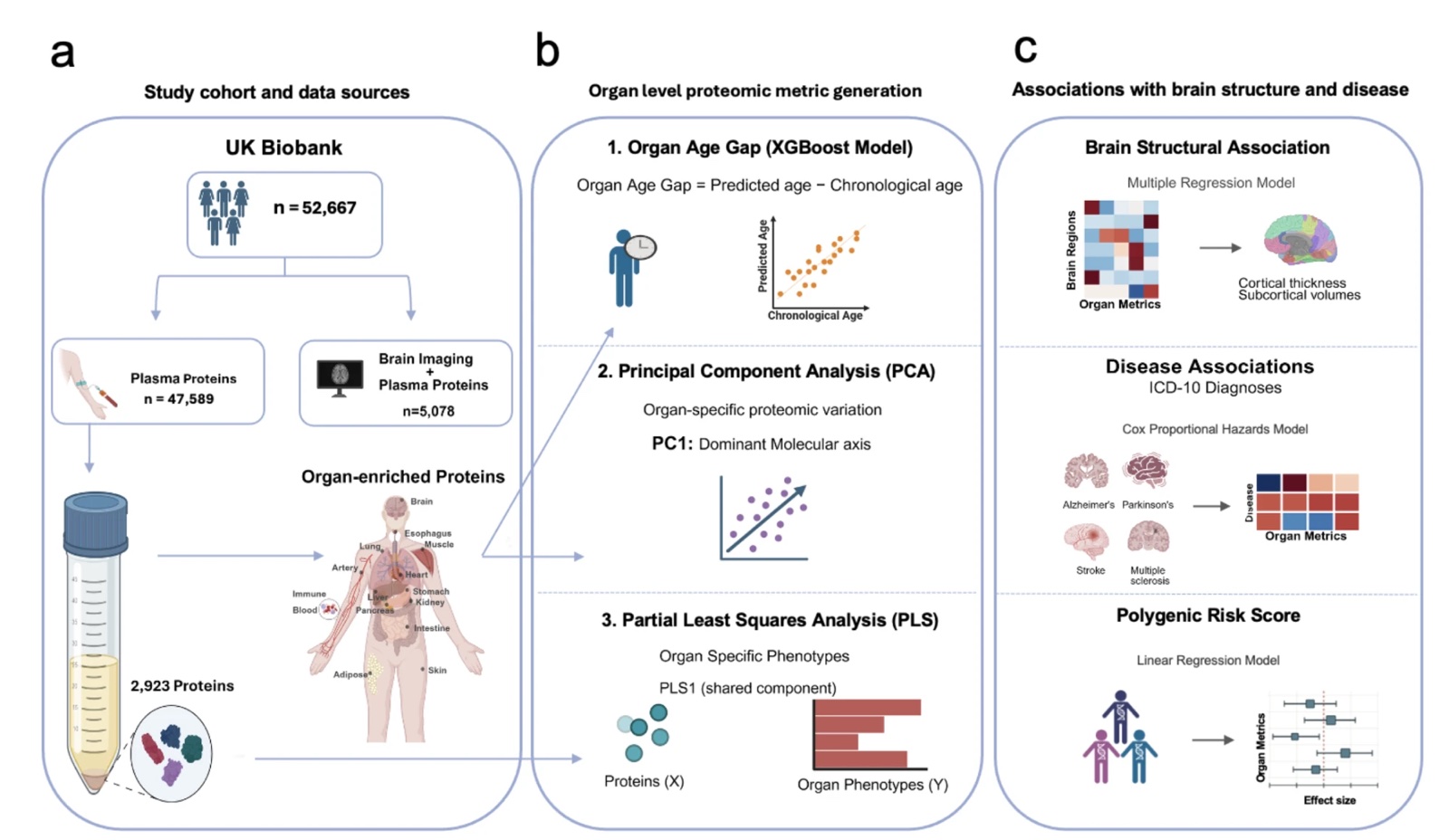
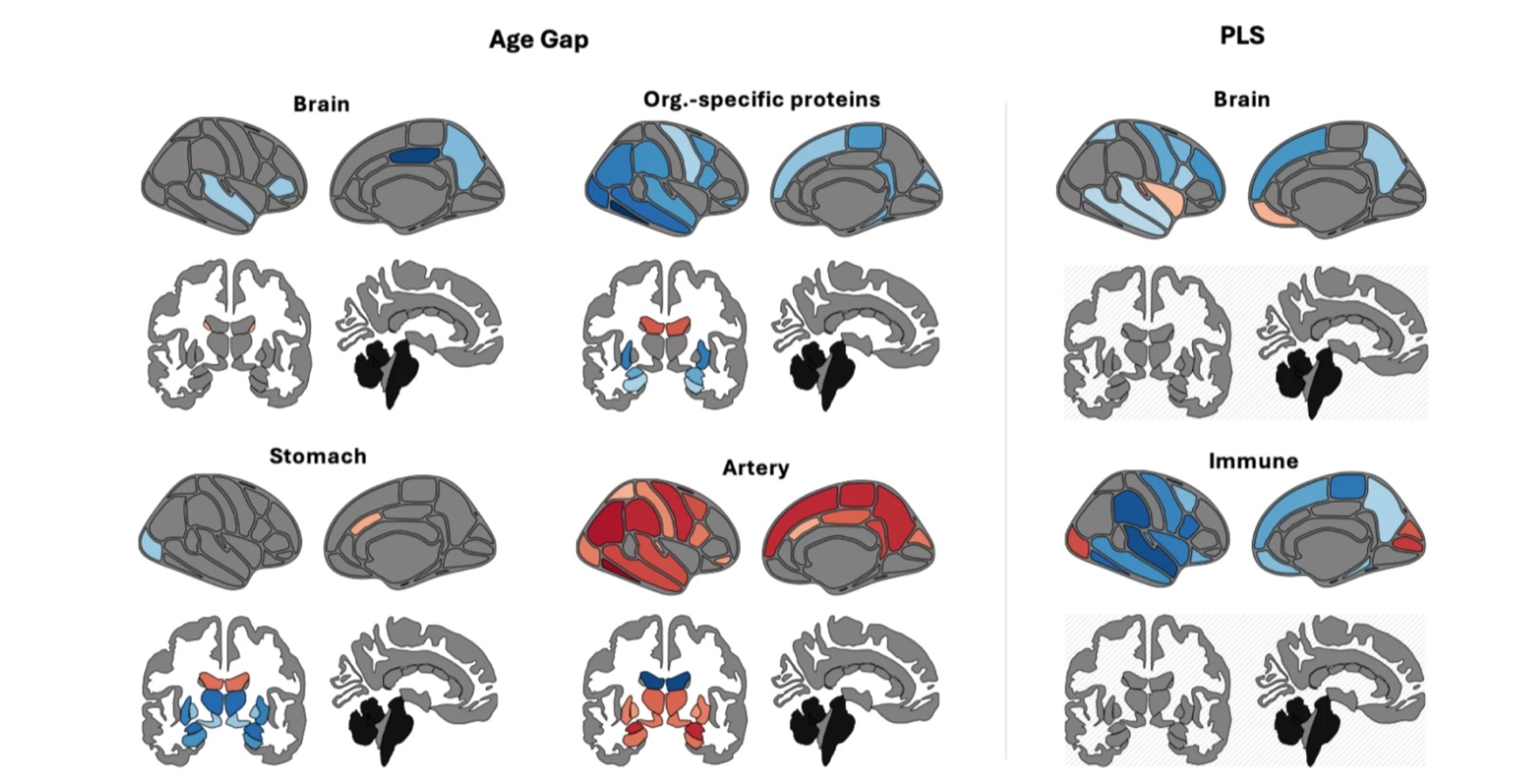
A new preprint led by Romina Zendehdel, which began as her master's thesis, uses plasma proteomics from over 50,000 UK Biobank participants to show how the biological aging of different organs relates to brain structure and neurodegenerative disease risk. Congratulations, Romina and team!
Read the preprint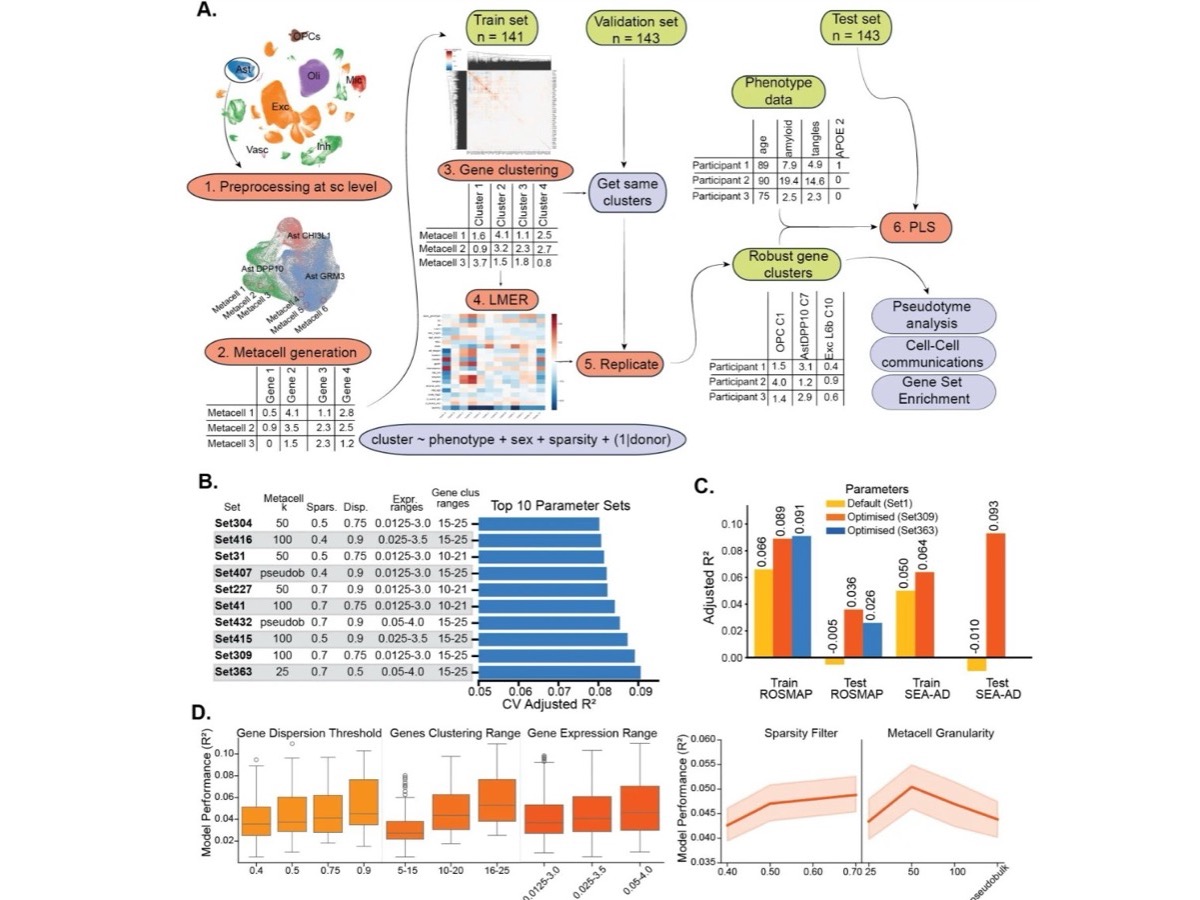
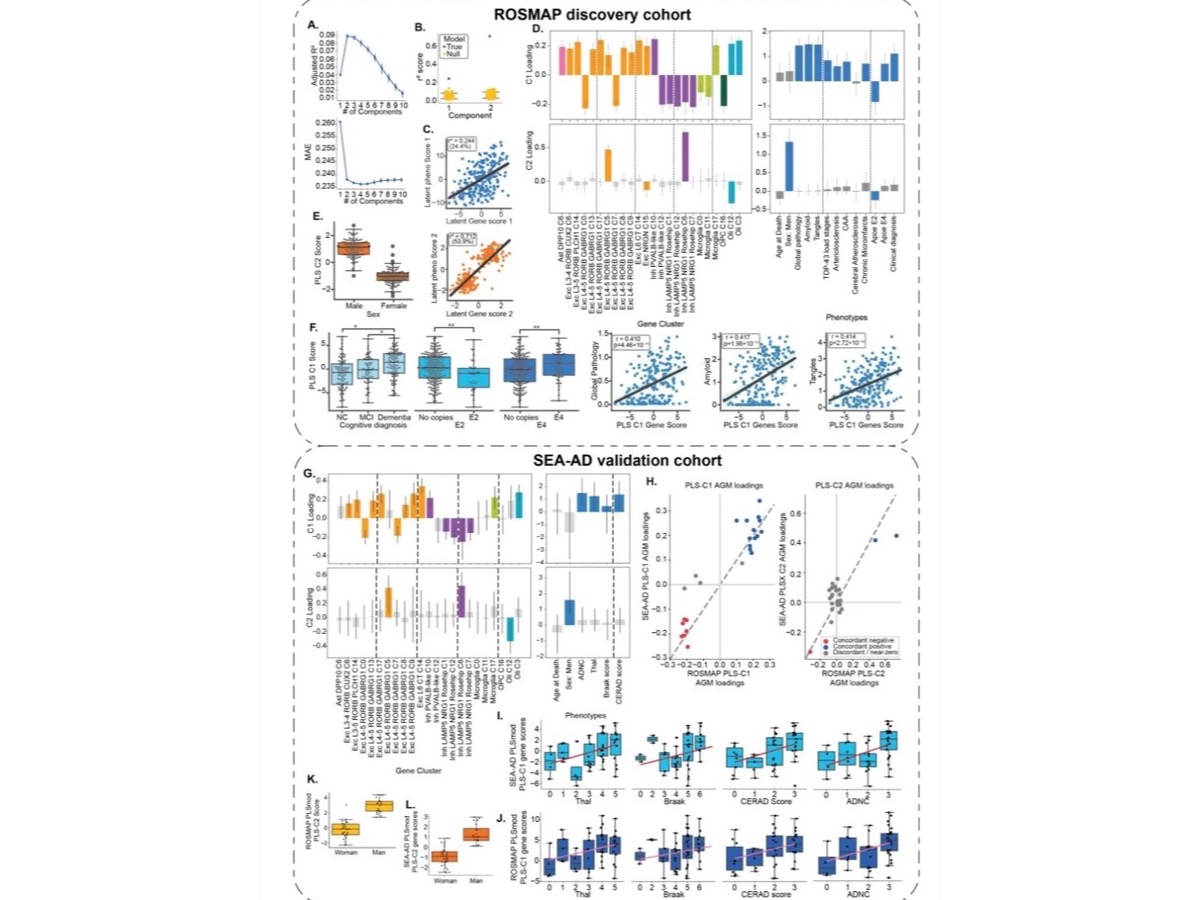
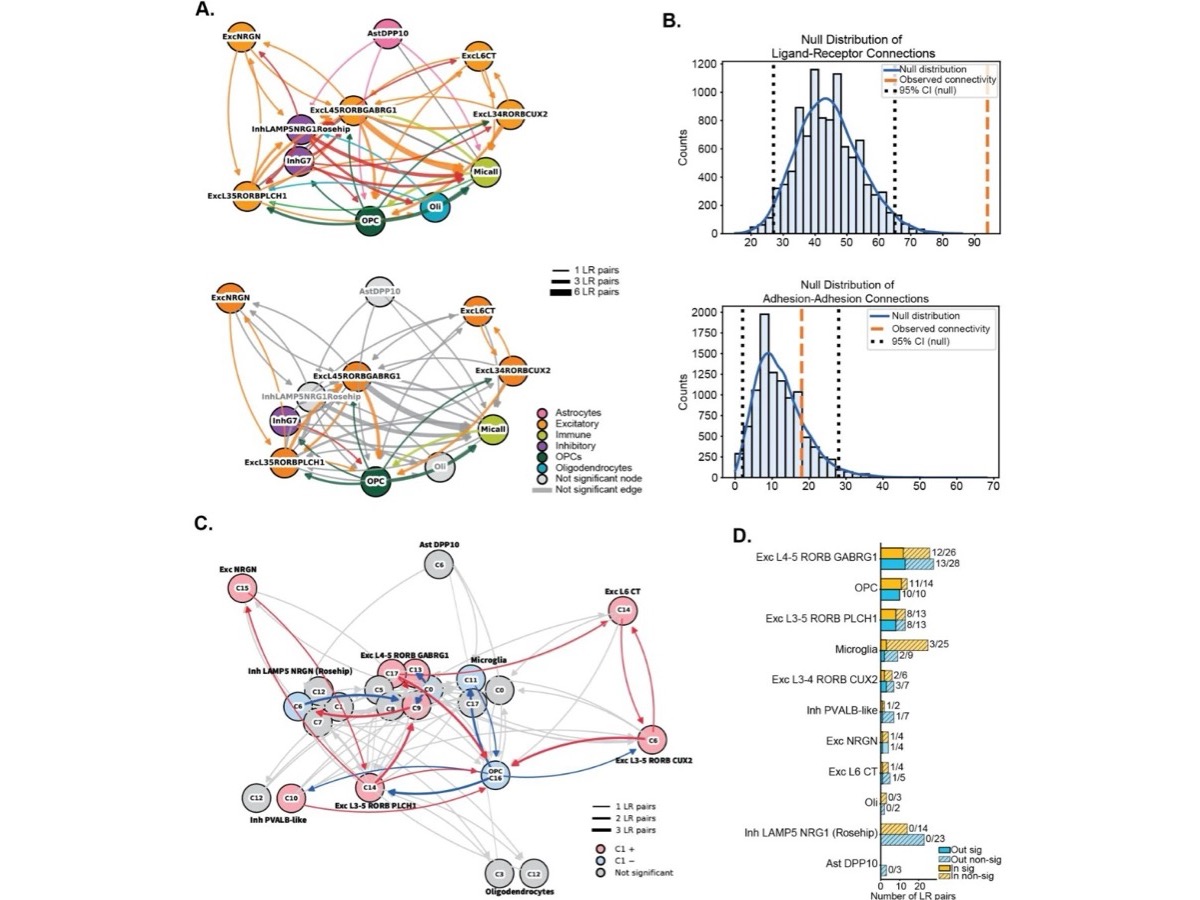
In her first PhD project, Gabriele Vilkaite built a single model integrating AD-related changes across neurons and glia, revealing a coordinated multicellular signature associated with pathology. The signature replicated in a completely independent dataset and was linked to faster cognitive decline. Congratulations, Gabi and team!
Read the preprint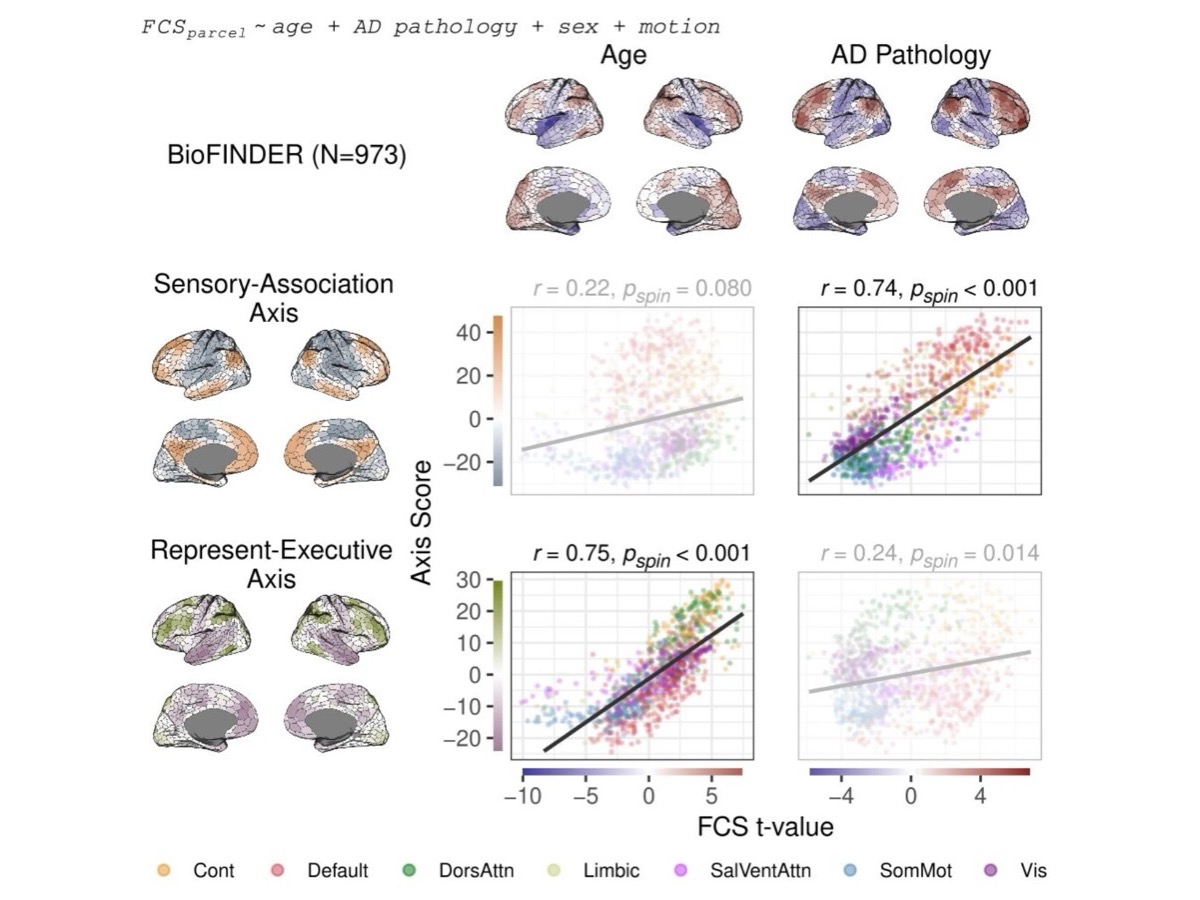
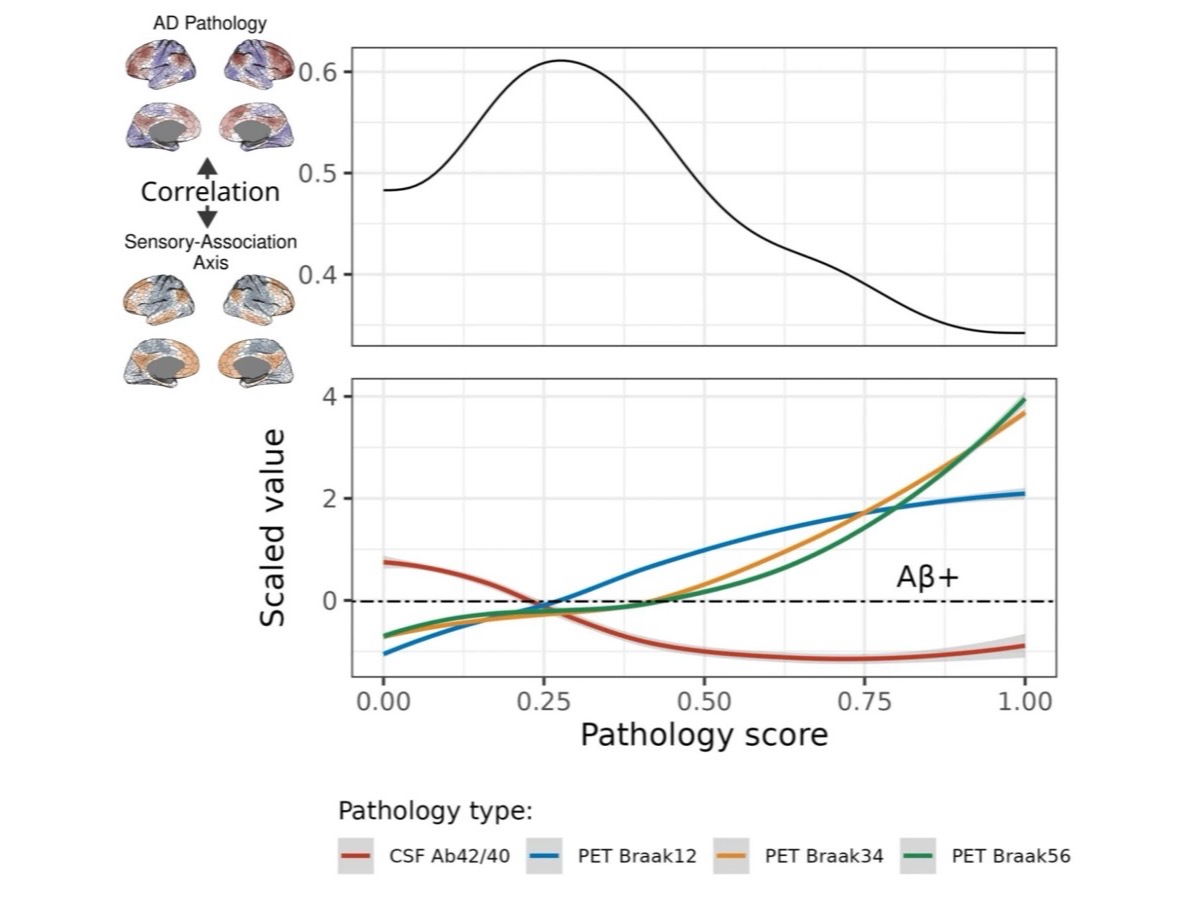
Led by PhD student Jonathan Rittmo, this work looks at how functional connectivity reorganizes in aging and Alzheimer's disease along distinct axes of functional brain organization. Congratulations, Jonathan and team!
Read the paper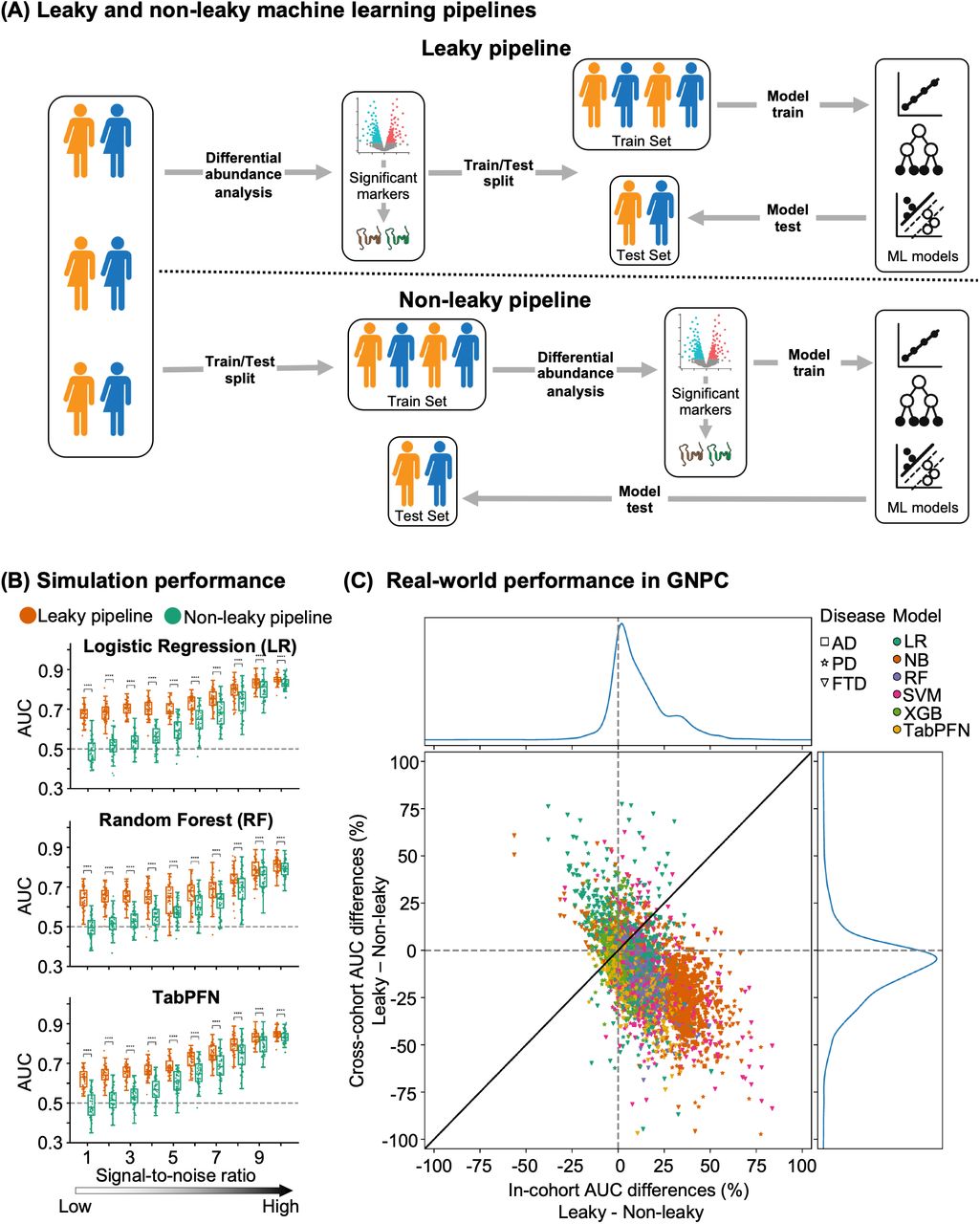
A new preprint led by Lijun An quantifies one common reason why proteomics biomarker studies are hard to replicate: data leakage. Even pure noise can look like a biomarker. The preprint also introduces two open tools to catch leakage, Leakly for pipelines and Plumber for manuscripts.
Read the preprint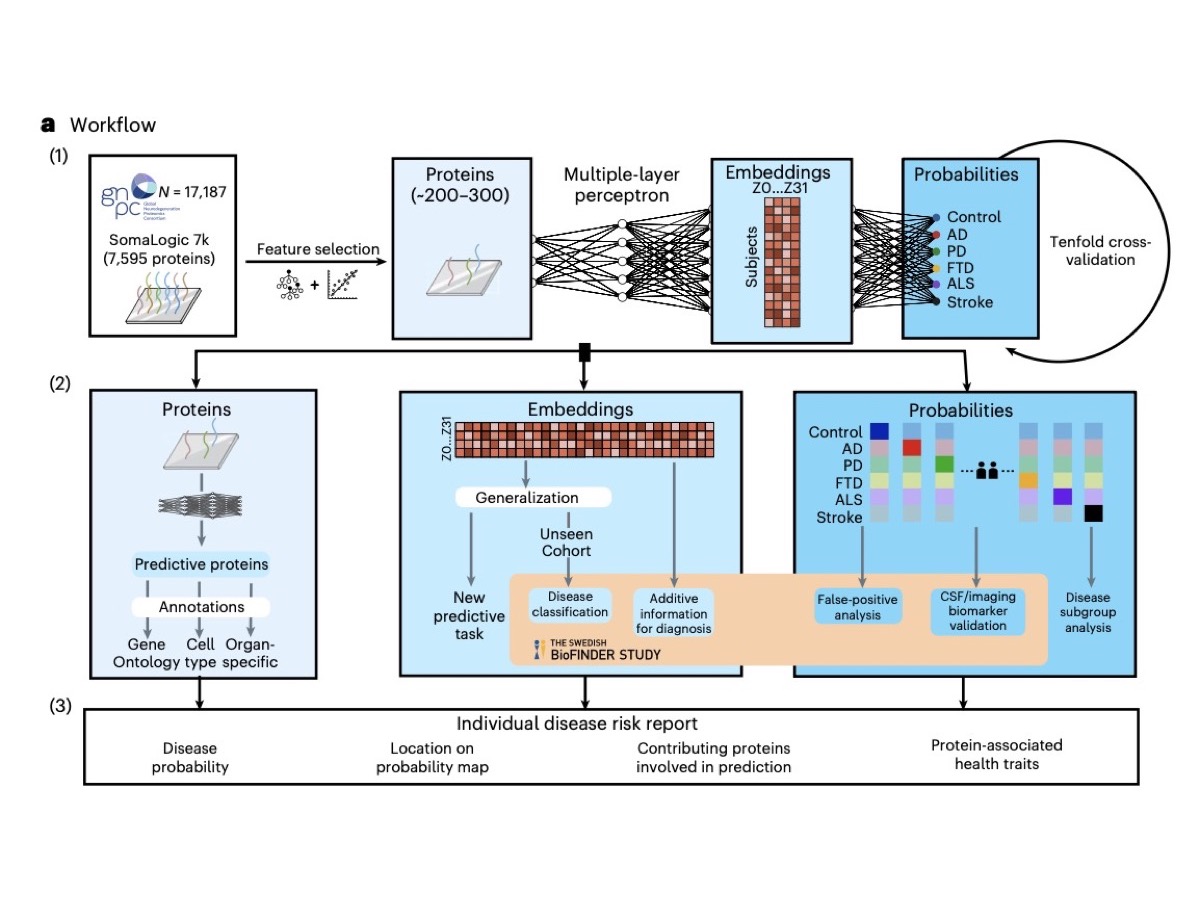
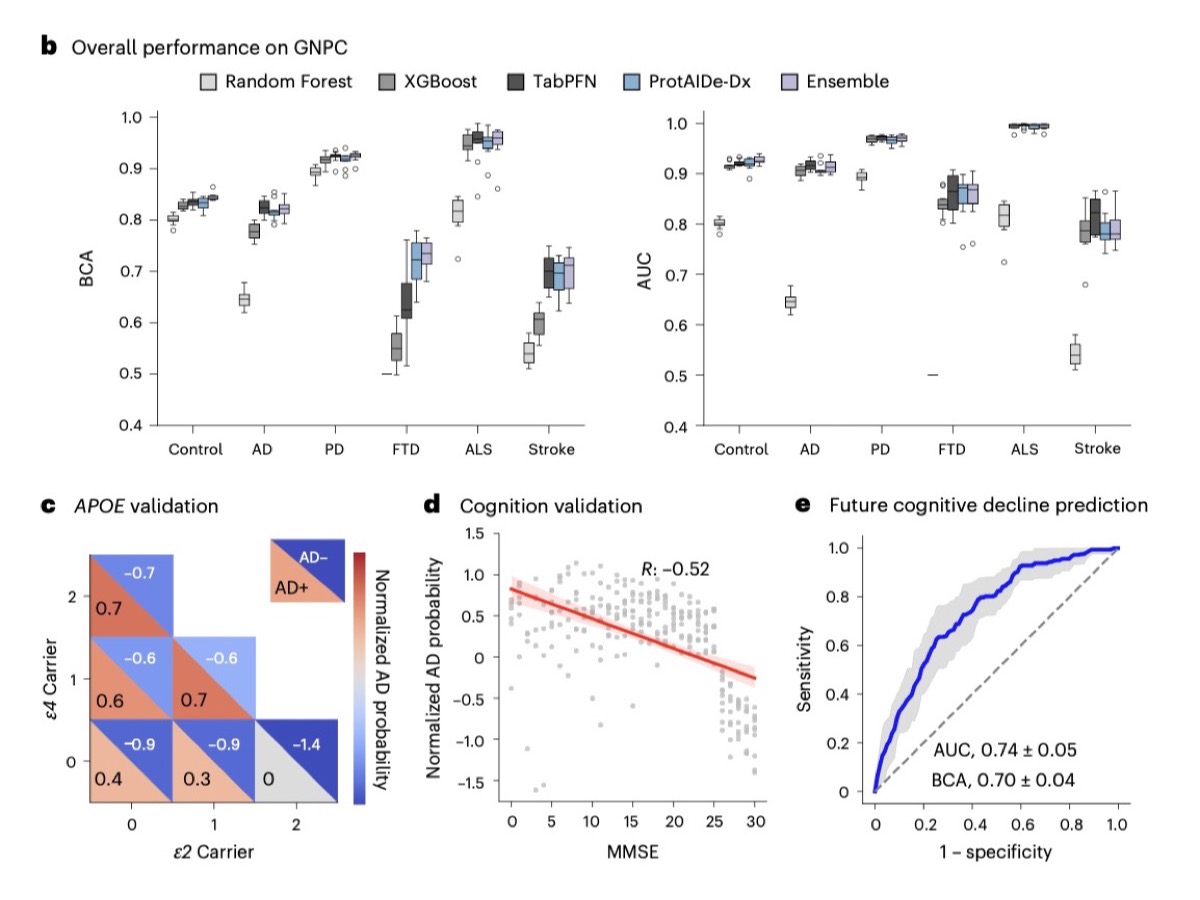
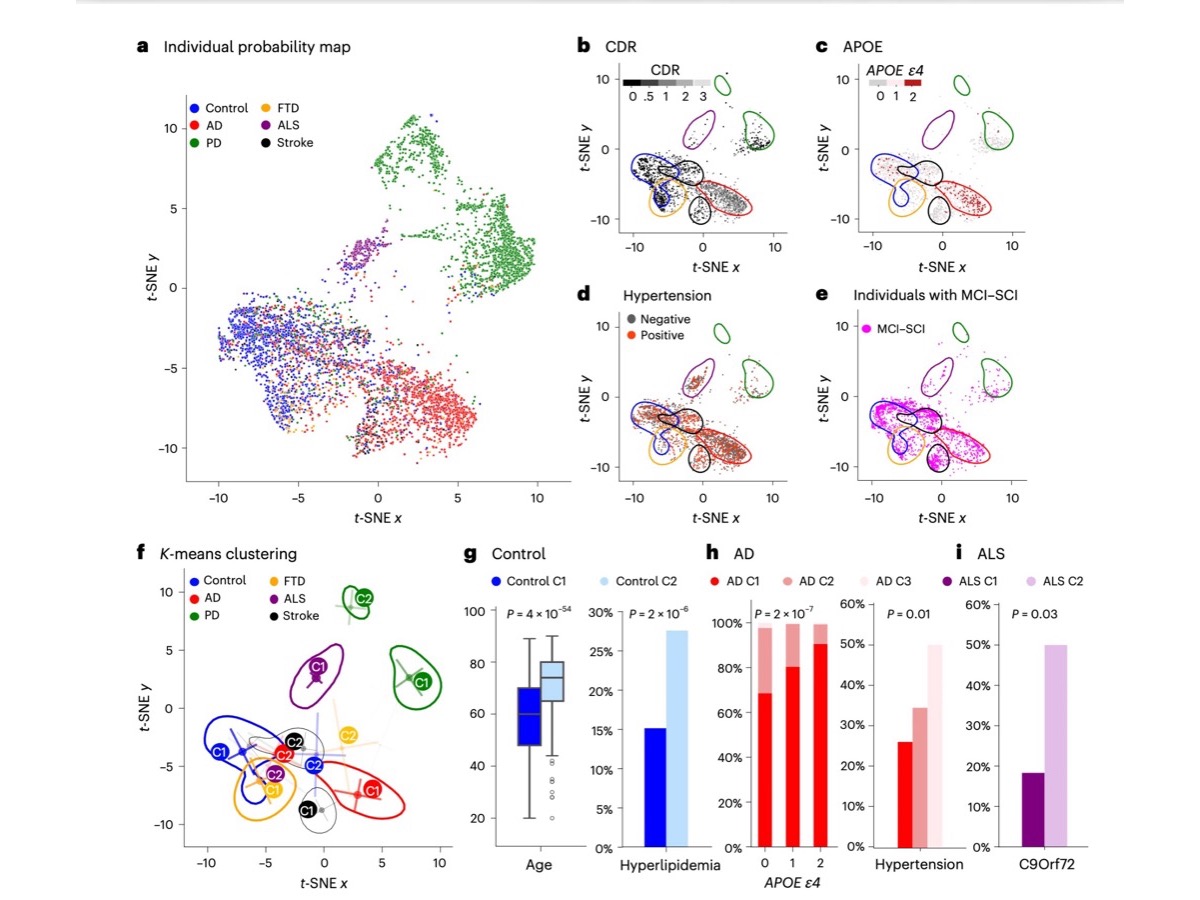
Lijun An and colleagues present ProtAIDe-Dx, an AI-proteomics model that diagnoses multiple neurodegenerative diseases from blood plasma. The model was validated for real-world clinical questions, including differential diagnosis in a memory clinic setting.
Read the paper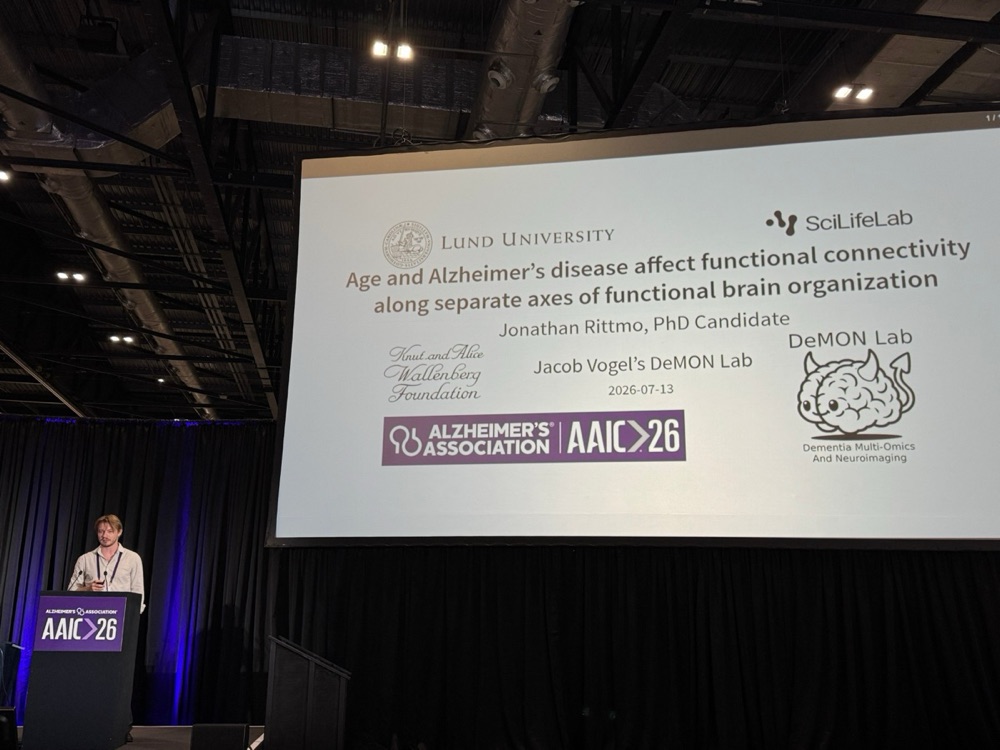
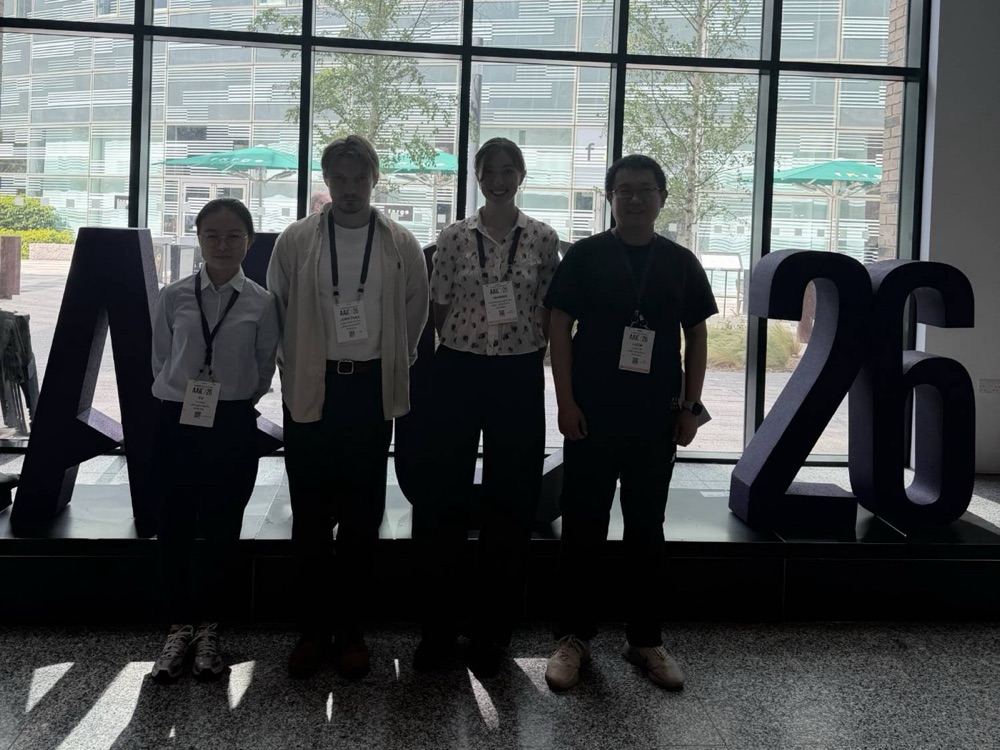
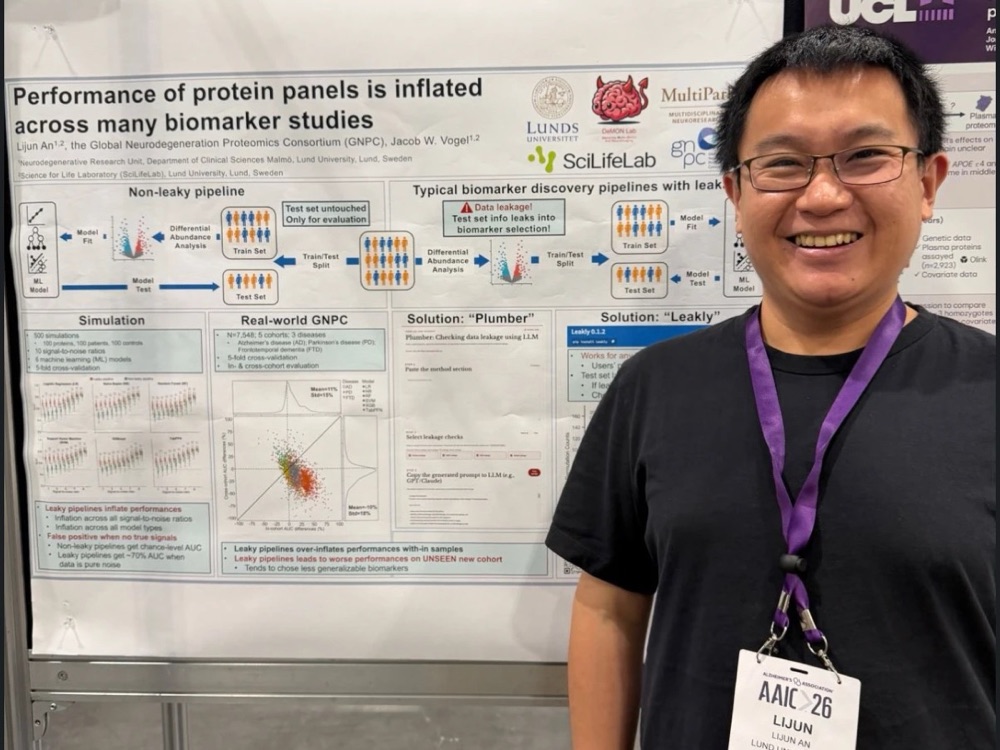
Romina Zendehdel, Yu Xiao, Lijun An and Jonathan Rittmo presented the lab's work at the Alzheimer's Association International Conference, including Jonathan's talk on how age and Alzheimer's disease affect functional connectivity.
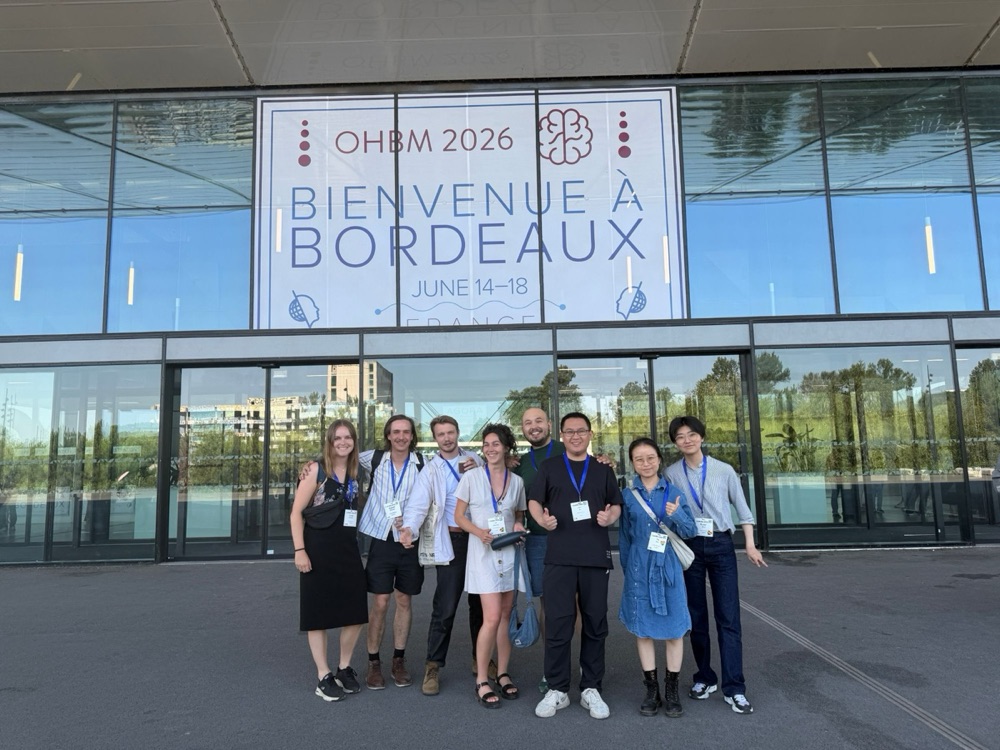
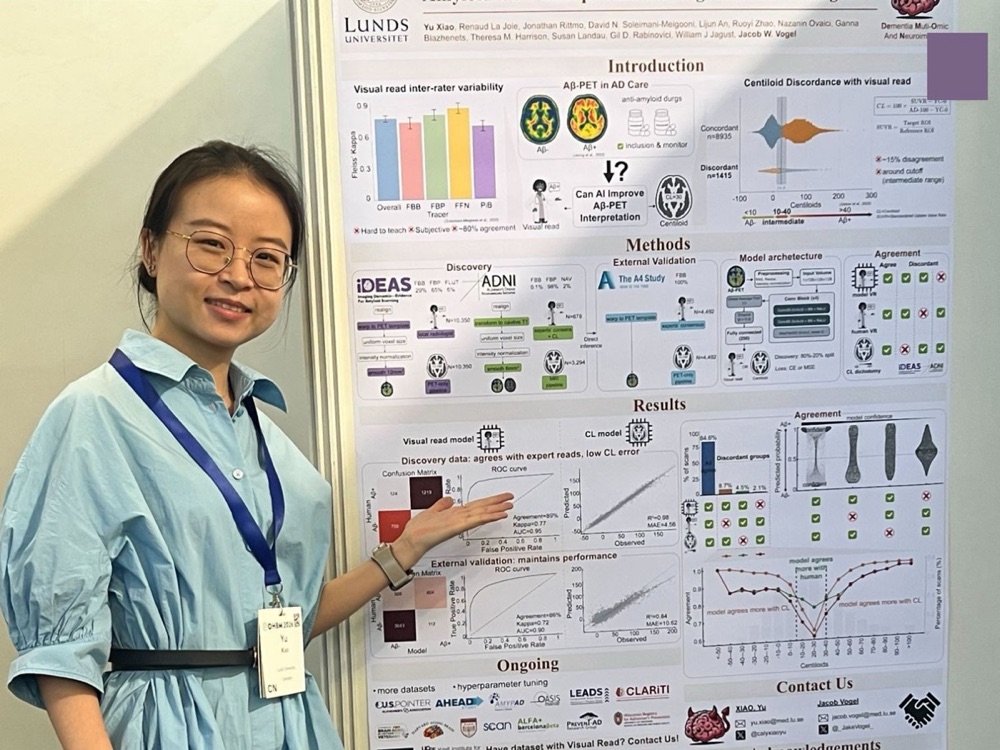
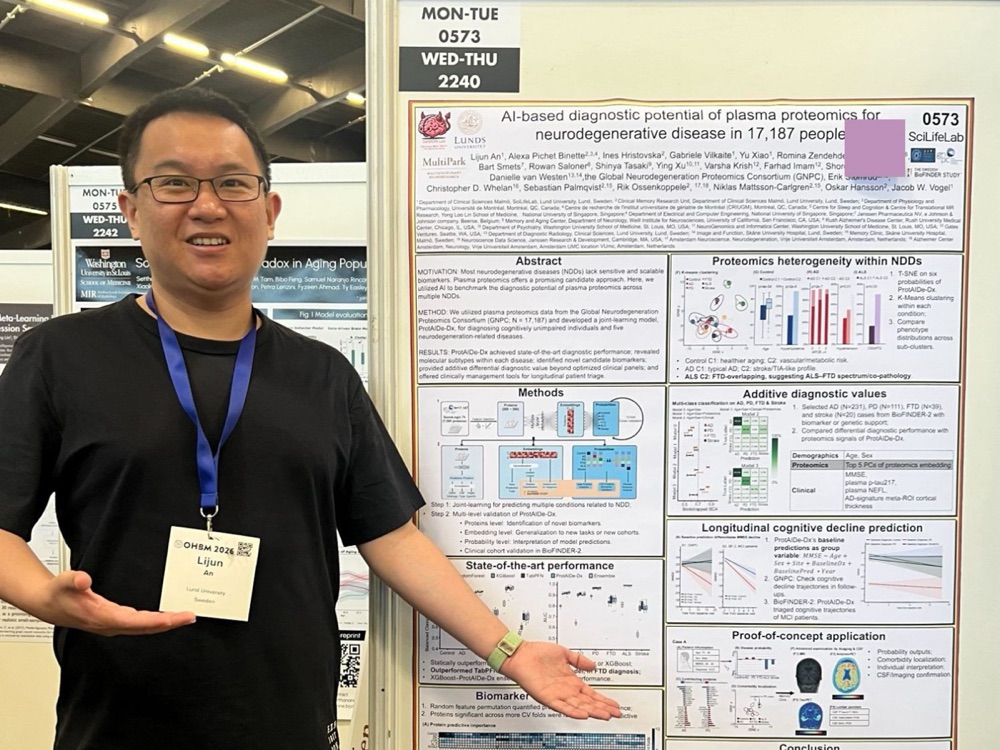
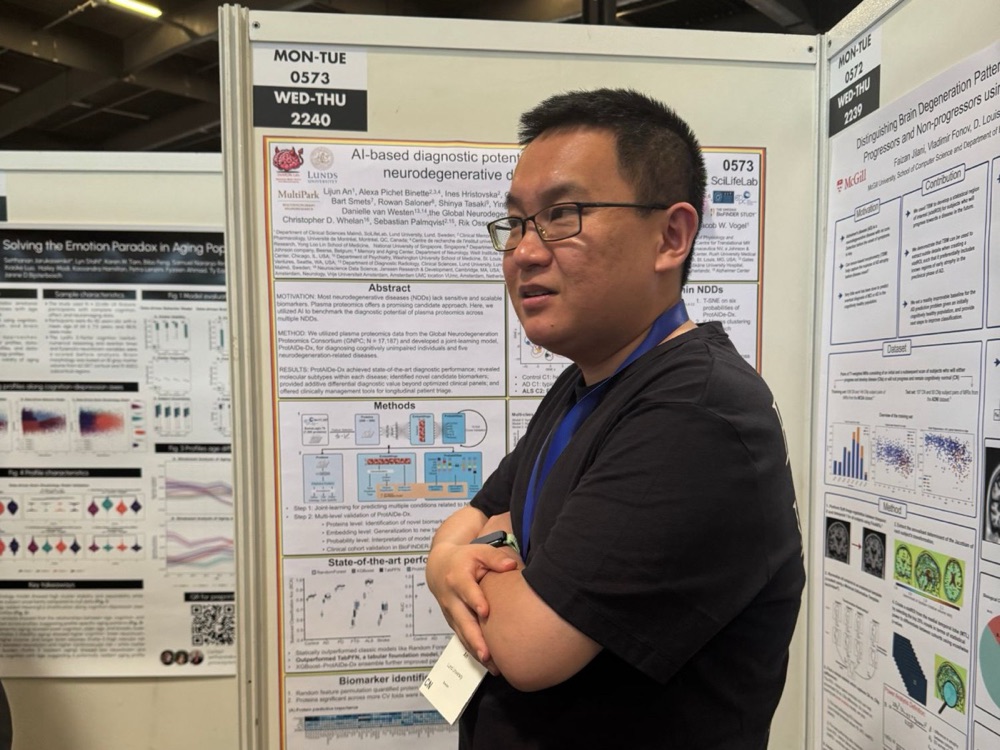
Léa Chauveau, Yu Xiao, Lijun An, Zoe Ruoyi Zhao and Jonathan Rittmo presented posters at the annual meeting of the Organization for Human Brain Mapping in Bordeaux.
Yu Xiao shared our work on PET visual reads, including a deep learning model that aims to support amyloid PET interpretation in clinical practice, especially in borderline cases.
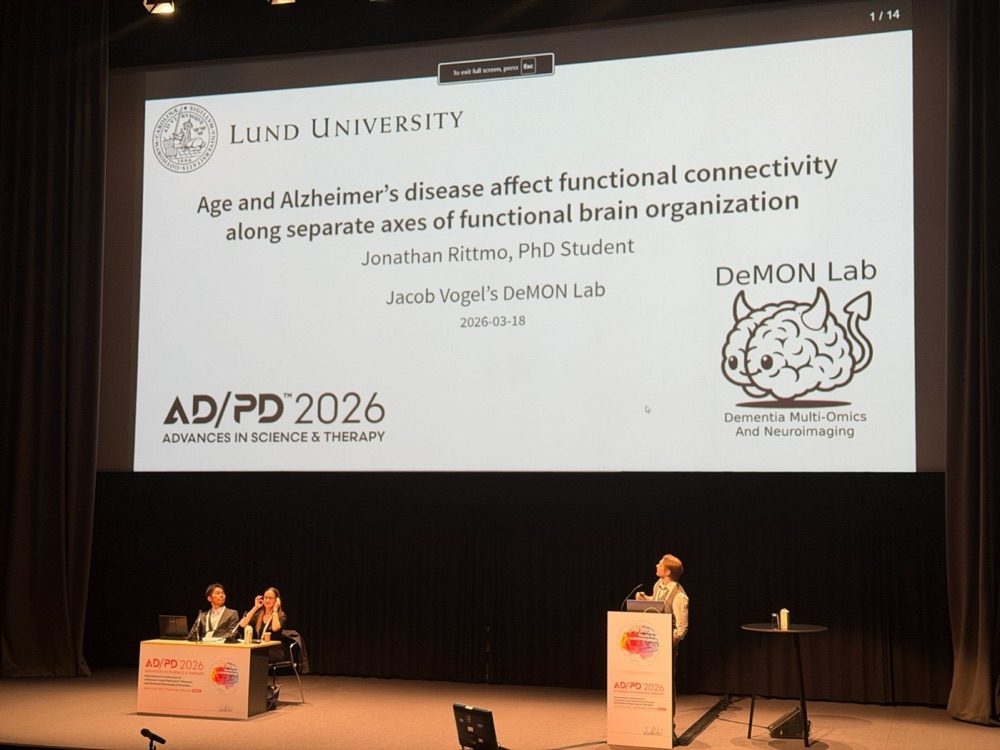
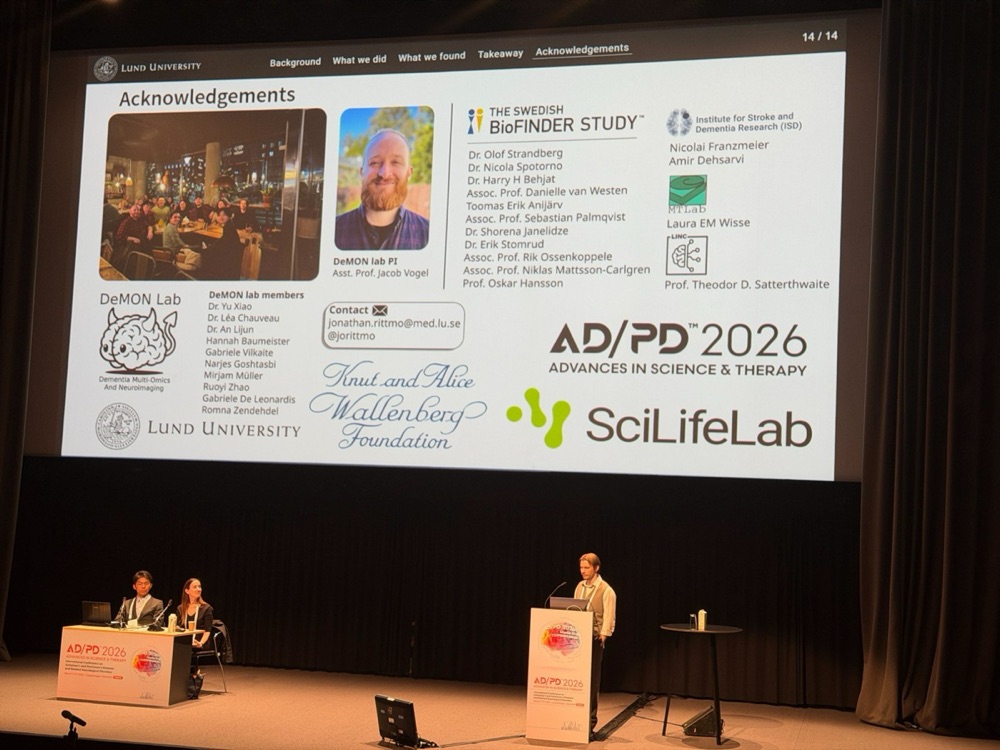
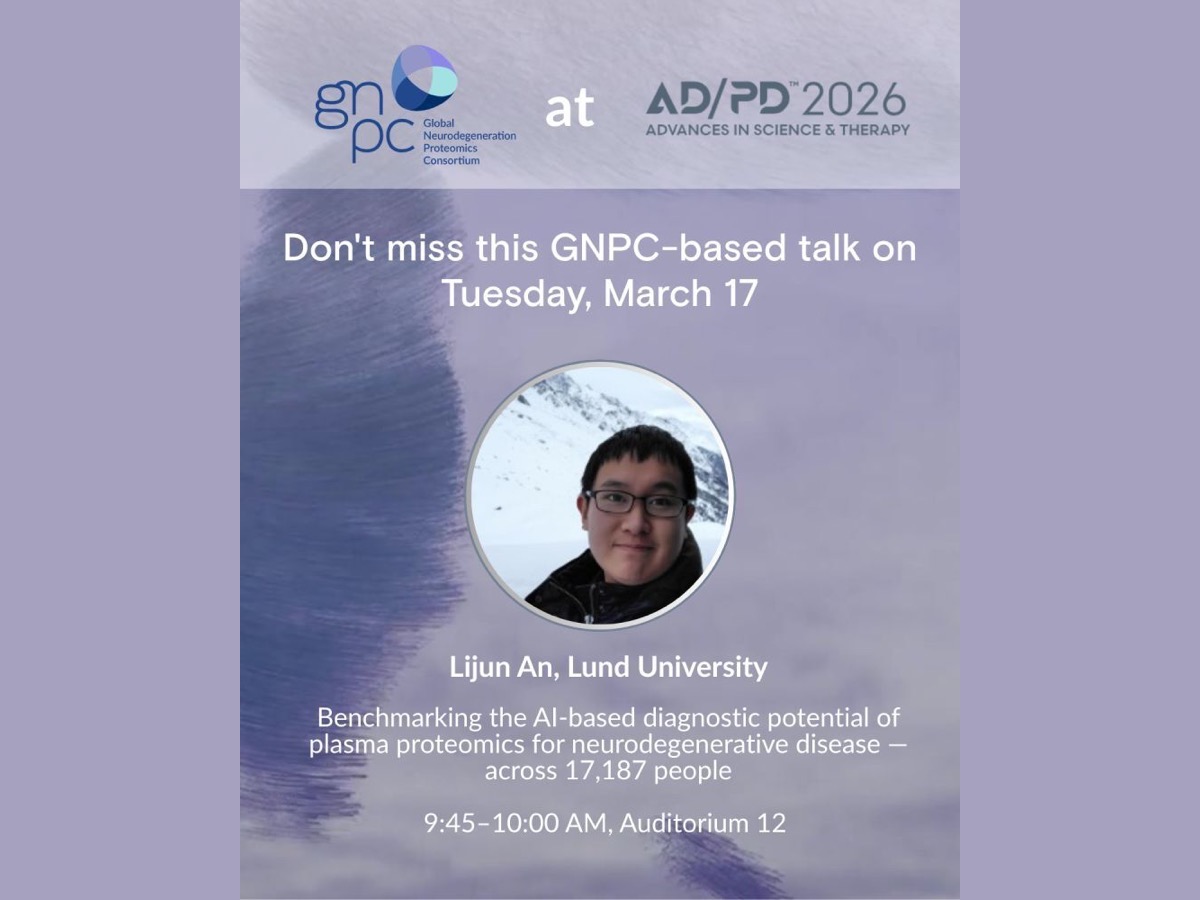
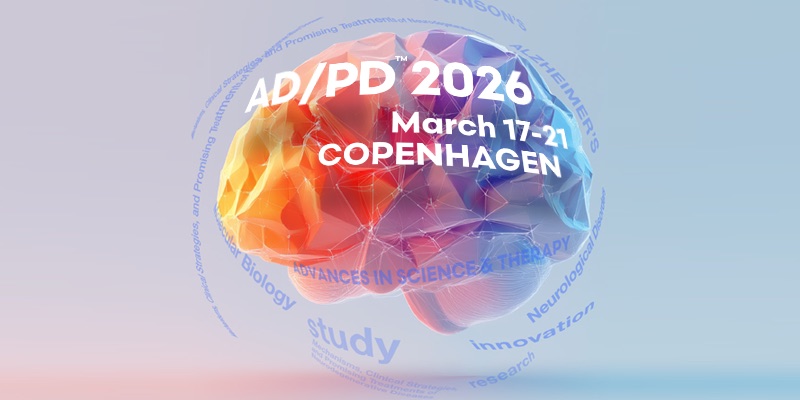
Lijun An and Jonathan Rittmo gave talks at AD/PD 2026 in Copenhagen: Lijun on the AI-based diagnostic potential of plasma proteomics across 17,187 people, and Jonathan on how age and Alzheimer's disease affect functional connectivity along separate axes of brain organization.
The GNPC highlighted Lijun An and Jacob Vogel as researchers collaborating with the consortium, and how the scale and diversity of its data help test and validate AI models for Alzheimer's research.
Technology Networks covered Gabriele Vilkaite's work on multicellular and sex-specific responses in Alzheimer's disease, with comments from Gabriele and Jacob Vogel.
Read the articlePositions in the DeMON Lab are advertised through Lund University. Have a question, or no position that fits? Get in touch through the Contact page.
Join us to model how tau spreads through the brain in Alzheimer's disease, using large tau-PET datasets. You will process and analyse the imaging data, adapt analysis pipelines and validate the model across modalities. We are looking for someone with a doctorate in a relevant field, neuroimaging and tau-PET experience, and programming skills in Python and/or R.
Read more and applyA one-year post split equally between research and running the lab. The research half supports the lab's neuroimaging and AI projects, with room to lead a project of one's own; the other half covers hiring, purchasing, documentation, the website and communications.
Read more and apply